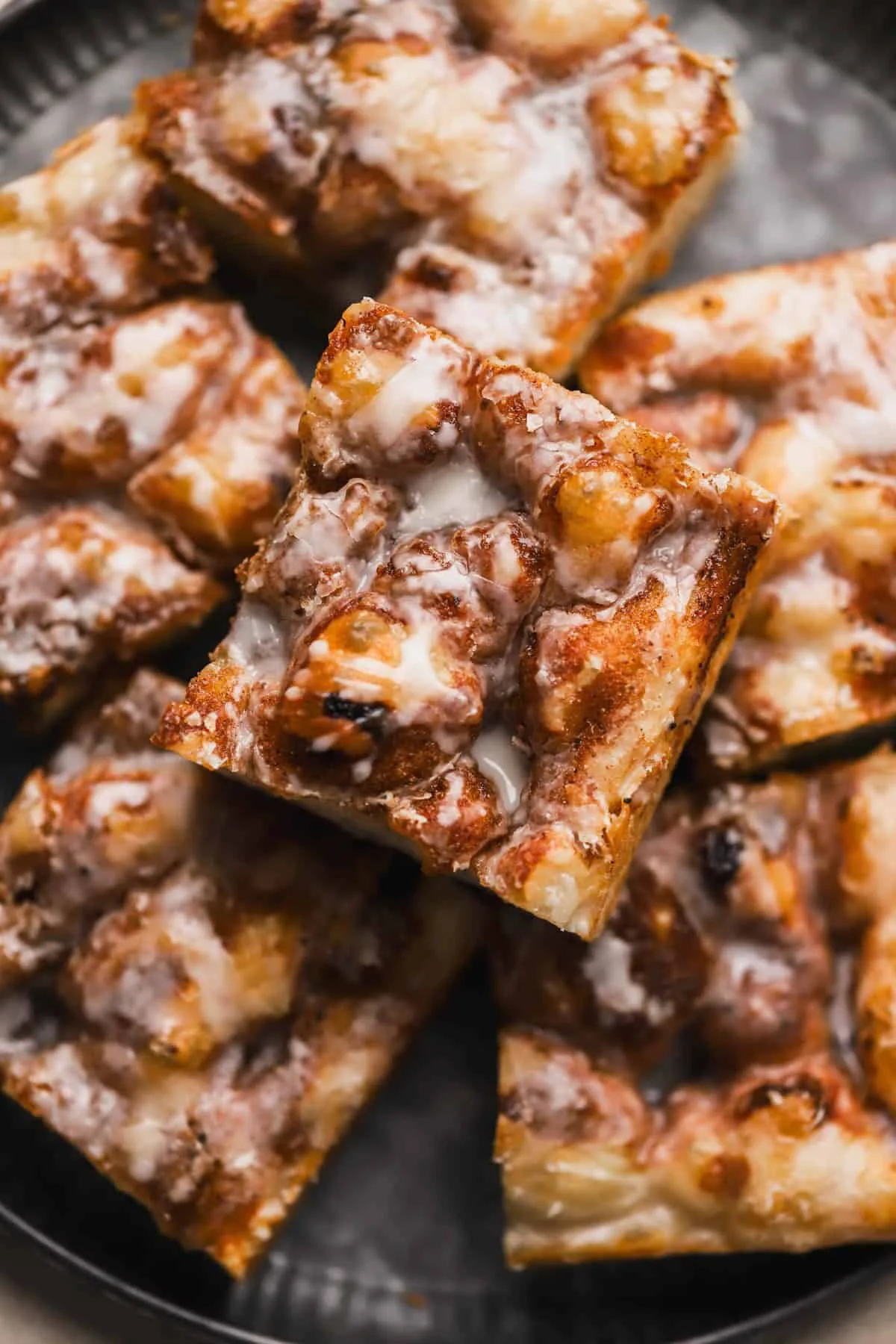
Cinnamon Focaccia
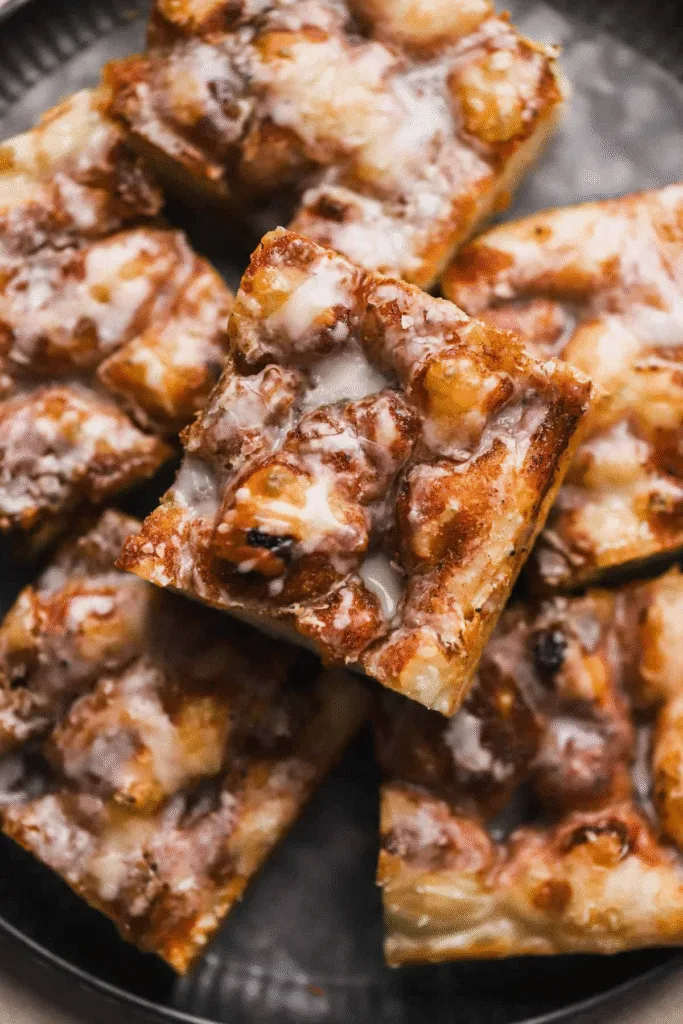
Cinnamon Focaccia combines the soft, airy texture of classic focaccia with the warm flavor of a cinnamon roll. An overnight rise develops flavor and structure in the dough, while brown butter, cinnamon, and brown sugar settle into deep dimples and caramelize during baking before a simple vanilla icing is drizzled over the warm bread.
Why You’ll Love This Recipe
- Cinnamon Roll Flavor With Less Work – You get buttery cinnamon-sugar flavor and vanilla icing without rolling, filling, slicing, and shaping individual buns.
- Soft and Airy Interior – The long refrigerated rise gives the dough time to develop a light, open crumb.
- Golden, Crisp Edges – Butter in the baking pan helps the exterior become deeply golden while the center remains soft.
- Rich Brown Butter Topping – Browning the butter adds toasted, nutty notes that make the cinnamon topping more complex.
- Excellent Make-Ahead Option – Most of the rise happens overnight in the refrigerator, so the dough can be prepared the day before serving.
- Versatile for Breakfast or Dessert – The finished focaccia works equally well for brunch, an afternoon treat, or a simple dessert.
Ingredients You’ll Need
For the Cinnamon Focaccia
- 2 cups warm water, about 110°F (43°C) – Hydrates the flour and creates the proper environment for activating the yeast.
- 2 teaspoons active dry yeast – Ferments the dough and produces the carbon dioxide responsible for its airy structure.
- 1 teaspoon granulated sugar – Gives the yeast a small amount of readily available food during activation.
- 4 cups bread flour, spooned and leveled – Provides the higher protein content needed to create a strong, elastic focaccia dough.
- 1½ teaspoons salt – Strengthens gluten and balances the sweetness of the topping.
- 1 tablespoon olive oil – Adds flavor and coats the dough during the first rise to prevent drying.
- 2 tablespoons unsalted butter, melted – Coats the baking pan and helps create a rich, crisp bottom crust.
For the Cinnamon-Sugar Topping
- 6 tablespoons browned butter – Provides deep nutty flavor and carries the cinnamon and sugar into the focaccia dimples.
- ⅓ cup light brown sugar – Adds sweetness and caramel notes while creating a sticky topping as it bakes.
- 2 teaspoons ground cinnamon – Supplies the classic warm spice flavor associated with cinnamon rolls.
For the Vanilla Icing
- 1 cup powdered sugar, sifted – Creates the smooth, sweet base of the icing.
- 1 teaspoon vanilla extract – Adds warm aromatic flavor.
- 2½ tablespoons milk, plus more if needed – Loosens the powdered sugar into a pourable glaze and allows you to control the final consistency.
Step-by-Step Instructions
Step 1: Activate the Yeast
Combine the warm water and granulated sugar in a small bowl. Sprinkle the active dry yeast over the surface and let it stand for 10–15 minutes, until foamy and visibly active.
Step 2: Mix the Dry Ingredients
In a large mixing bowl, whisk the bread flour and salt together. Distributing the salt evenly prevents concentrated pockets and helps the dough develop consistently.
Step 3: Form the Dough
Pour the activated yeast mixture and olive oil into the flour. Stir until a sticky, shaggy dough forms and no large dry patches remain.
Step 4: Coat the Dough
Lightly rub the surface of the dough with olive oil. This helps prevent the top from drying out during the long refrigerated rise.
Step 5: Refrigerate for the First Rise
Cover the bowl tightly with plastic wrap or a damp tea towel and refrigerate for at least 12 hours. The slow fermentation develops flavor while allowing the dough to strengthen with very little hands-on work.
Step 6: Prepare the Baking Pan
Grease a 9×13-inch baking pan and line it with parchment paper. Pour the 2 tablespoons melted butter into the center and spread it across the bottom.
Step 7: Fold and Transfer the Dough
Using lightly wet or oiled hands, gently pull the dough away from the sides of the bowl and fold it toward the center several times. Transfer the dough to the buttered pan without pressing out too much trapped gas.
Step 8: Complete the Second Rise
Cover the pan and let the dough rise in a warm place for 1½–2 hours. It should become visibly puffy and spread more fully toward the edges of the pan.
Step 9: Brown the Butter
Melt approximately ½ cup butter in a small saucepan over medium heat. Stir continuously until the milk solids turn golden-amber and the butter develops a nutty aroma, yielding about 6 tablespoons browned butter.
Step 10: Cool the Brown Butter
Immediately remove the browned butter from the heat to prevent burning. Let it cool for approximately 10 minutes before mixing in the sugar and cinnamon.
Step 11: Prepare the Cinnamon Topping
Stir the light brown sugar and ground cinnamon into the browned butter until evenly combined. The mixture should be fluid enough to drizzle but thick enough to settle into the dough.
Step 12: Preheat the Oven
Preheat the oven to 450°F (232°C) shortly before the second rise is complete. A thoroughly heated oven encourages rapid expansion and good browning.
Step 13: Dimple the Dough
Wet your fingertips and press deeply into the risen dough all across the surface. Push almost to the bottom without tearing the dough, creating the characteristic focaccia dimples.
Step 14: Add the Cinnamon-Butter Topping
Drizzle the cinnamon-brown butter mixture evenly over the dough, allowing some of it to collect naturally inside the dimples.
Step 15: Bake Until Golden
Bake for 20–25 minutes, until the focaccia is deeply golden around the edges and cooked through in the center.
Step 16: Cool Briefly
Let the focaccia cool in the pan for approximately 10 minutes, then transfer it to a cooling rack so the bottom does not become soggy.
Step 17: Make the Vanilla Icing
Whisk the sifted powdered sugar, vanilla extract, and milk together until smooth. Add a few extra drops of milk if necessary to create a drizzle-friendly consistency.
Step 18: Finish and Serve
Drizzle the vanilla icing over the still-warm focaccia so some of it melts slightly into the surface. Slice into 12 squares and serve warm or at room temperature.
Recipe Notes & Tips
- Check the Water Temperature – Water around 110°F is warm enough to activate active dry yeast without overheating it.
- Expect a Sticky Dough – High-hydration focaccia dough is naturally sticky, so resist the urge to add excessive flour.
- Use Bread Flour for Structure – Its higher protein content helps the dough trap fermentation gases and develop the characteristic airy interior.
- Brown the Butter Carefully – Butter can move from golden to burnt very quickly, so remove it from the heat as soon as the milk solids turn amber and smell nutty.
- Don’t Rush the Second Rise – The dough should look visibly puffed before dimpling. Underproofed focaccia will bake up denser.
- Drizzle Icing While Warm – Warm bread slightly melts the glaze so it settles into the surface instead of sitting as a thick layer on top.
Nutritional Information
- Prep Time: 30 minutes
- Cooking Time: 20–30 minutes
- Rise Time: Approximately 14 hours
- Total Time: Approximately 15 hours
- Servings: 12 pieces
- Serving Size: 1 square
- Calories: Approximately 248 calories per serving
- Protein: Approximately 5 g
- Carbohydrates: Approximately 48 g
- Fiber: Approximately 1 g
- Sugar: Approximately 7 g
- Total Fat: Approximately 9 g
- Saturated Fat: Approximately 5 g
- Polyunsaturated Fat: Approximately 1 g
- Monounsaturated Fat: Approximately 2 g
- Trans Fat: Approximately 0.3 g
- Cholesterol: Approximately 20 mg
- Sodium: Approximately 352 mg
- Potassium: Approximately 64 mg
- Vitamin A: Approximately 243 IU
- Vitamin C: Approximately 0.01 mg
- Calcium: Approximately 23 mg
- Iron: Approximately 0.5 mg
Nutritional values are estimates and may vary according to the flour, butter, milk, icing quantity, and exact portion size.
Perfect Pairings
- Fresh Coffee – The roasted bitterness of coffee balances the sweet icing and cinnamon topping.
- Fresh Berries – Strawberries, raspberries, or blueberries add acidity and freshness beside the rich bread.
- Vanilla Yogurt – A spoonful of creamy yogurt works well for breakfast or brunch and adds a tangy contrast.
- Warm Apple Compote – Apples and cinnamon naturally complement the brown butter and spiced topping.
Ideal Occasions
- Weekend Brunch – The overnight rise means most of the preparation can be done before the morning meal.
- Holiday Breakfasts – Cinnamon, brown butter, and vanilla make this especially fitting for cozy holiday mornings.
- Coffee Gatherings – The bread is easy to cut into squares and serve alongside coffee or tea.
- Casual Desserts – Serve warm pieces after dinner when you want the flavor of cinnamon rolls without making individual pastries.
Storage & Serving Tips
- Store Airtight at Room Temperature – Keep leftovers in a tightly sealed container for approximately 1–2 days for the best texture.
- Refrigerate for Longer Storage – If keeping it beyond a couple of days, refrigerate the focaccia and warm individual pieces before serving.
- Reheat Gently – Warm slices briefly in a low oven or microwave just until soft; overheating can dry out the bread.
- Add Extra Icing After Reheating – If desired, reserve a little glaze and drizzle it over warmed leftovers for a fresher finish.
Creative Variations to Try
- Apple Cinnamon Focaccia – Add very thin slices of apple over the dough before baking for a fruitier version.
- Pecan Brown Butter Focaccia – Sprinkle chopped toasted pecans over the cinnamon topping for additional crunch.
- Maple Cinnamon Focaccia – Replace part of the vanilla icing liquid with maple syrup for a deeper fall-inspired flavor.
- Chocolate Cinnamon Focaccia – Scatter mini chocolate chips over the dough before baking for a richer dessert variation.
Troubleshooting Common Issues
- Dough Doesn’t Rise – The yeast may be inactive or the water may have been too hot. Make sure the yeast foams during activation before proceeding.
- Focaccia Is Dense – The dough may not have fermented long enough or the second rise may have been cut short. Give it enough time to become visibly puffy.
- Topping Burns – Brown sugar can caramelize quickly at 450°F. If the surface darkens too quickly, loosely tent the focaccia with foil during the final minutes.
- Bottom Becomes Soggy – Leaving the bread in the pan too long after baking traps steam. Transfer it to a cooling rack after about 10 minutes.
Why This Recipe Works
Cinnamon Focaccia works because a high-hydration yeast dough is given enough time to develop both gluten structure and fermentation flavor. Bread flour provides the protein needed to create an elastic gluten network, while the long refrigerated rise allows yeast to slowly produce carbon dioxide and aromatic fermentation compounds. The trapped gas expands rapidly in the hot oven, creating the open, airy interior typical of focaccia. Butter in the pan promotes browning and crispness on the bottom, while deep dimples create pockets where the cinnamon-brown butter mixture can collect instead of simply running off the surface. Browning the butter also creates toasted milk solids through the Maillard reaction, producing nutty flavors that pair particularly well with cinnamon and brown sugar. The final vanilla glaze adds sweetness and surface moisture without changing the bread’s underlying structure. At approximately 248 calories per 1-of-12 serving, this is relatively moderate compared with many heavily frosted cinnamon rolls, although portion size and icing quantity can change the final calorie count.
Final Thoughts
Cinnamon Focaccia offers the warm, buttery flavor of a cinnamon roll in a simpler, shareable format with crisp edges and a soft, airy center. The overnight fermentation requires patience but very little active work, and the combination of brown butter, cinnamon sugar, and vanilla icing creates plenty of flavor without complicated shaping. For a lighter version, reduce the amount of icing, cut smaller portions, or serve the bread with fresh fruit instead of extra sweet toppings.