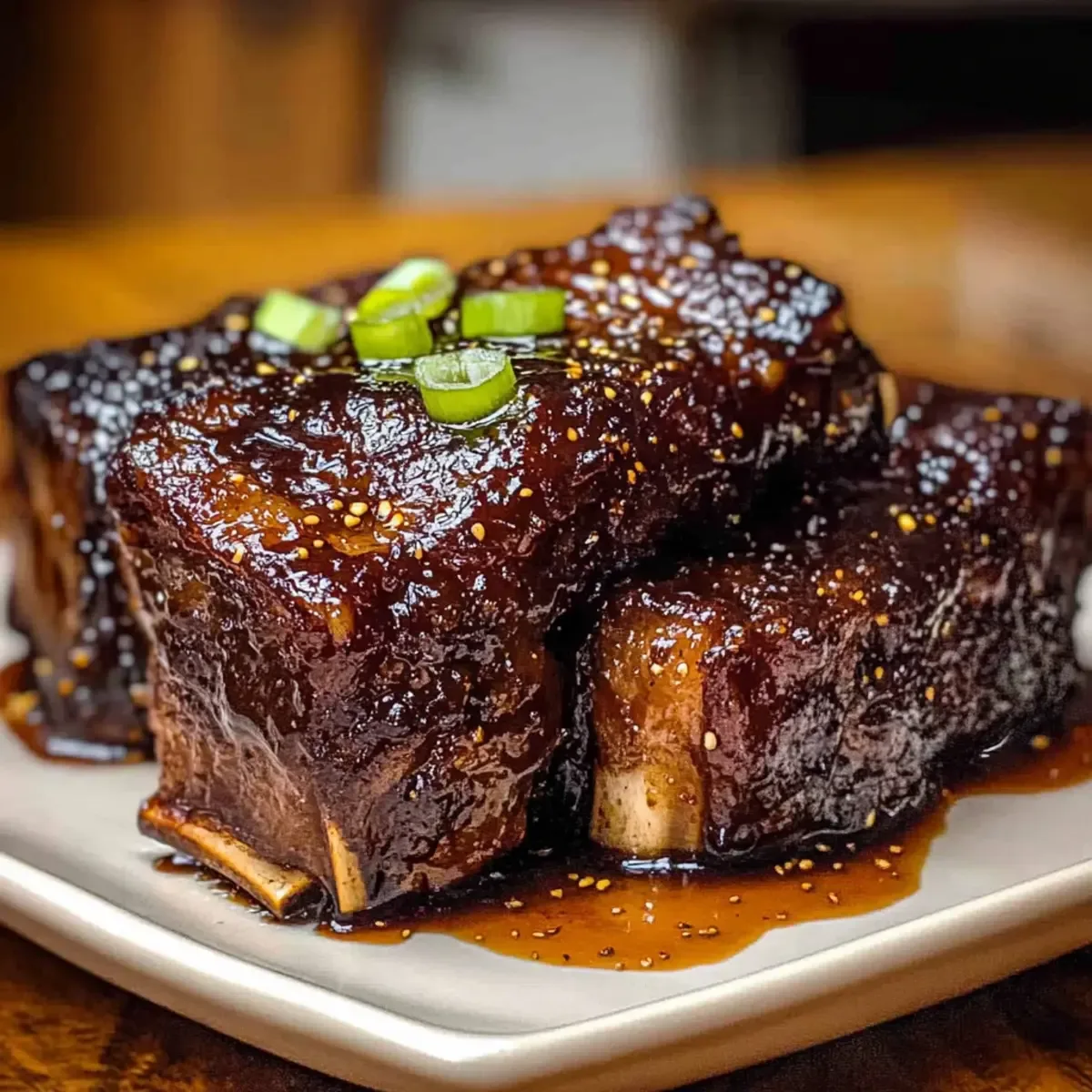
Melt-in-Your-Mouth Caramelized Slow Roast Asian Beef Short Rib
This recipe employs a classic braising technique to transform tough, bone-in beef short ribs into fork-tender morsels. By marrying an umami-rich soy and hoisin marinade with the slow-cooking process of a Dutch oven, you achieve a deep, complex flavor profile that culminates in a sticky, caramelized finish.
Why You’ll Love This Recipe
- Unrivaled Tenderness – The long, slow roasting time breaks down the connective tissue in the ribs, resulting in meat that effortlessly pulls away from the bone.
- Deep Flavor Penetration – Marinating the meat prior to roasting ensures the aromatics like fresh ginger and garlic permeate the fibers.
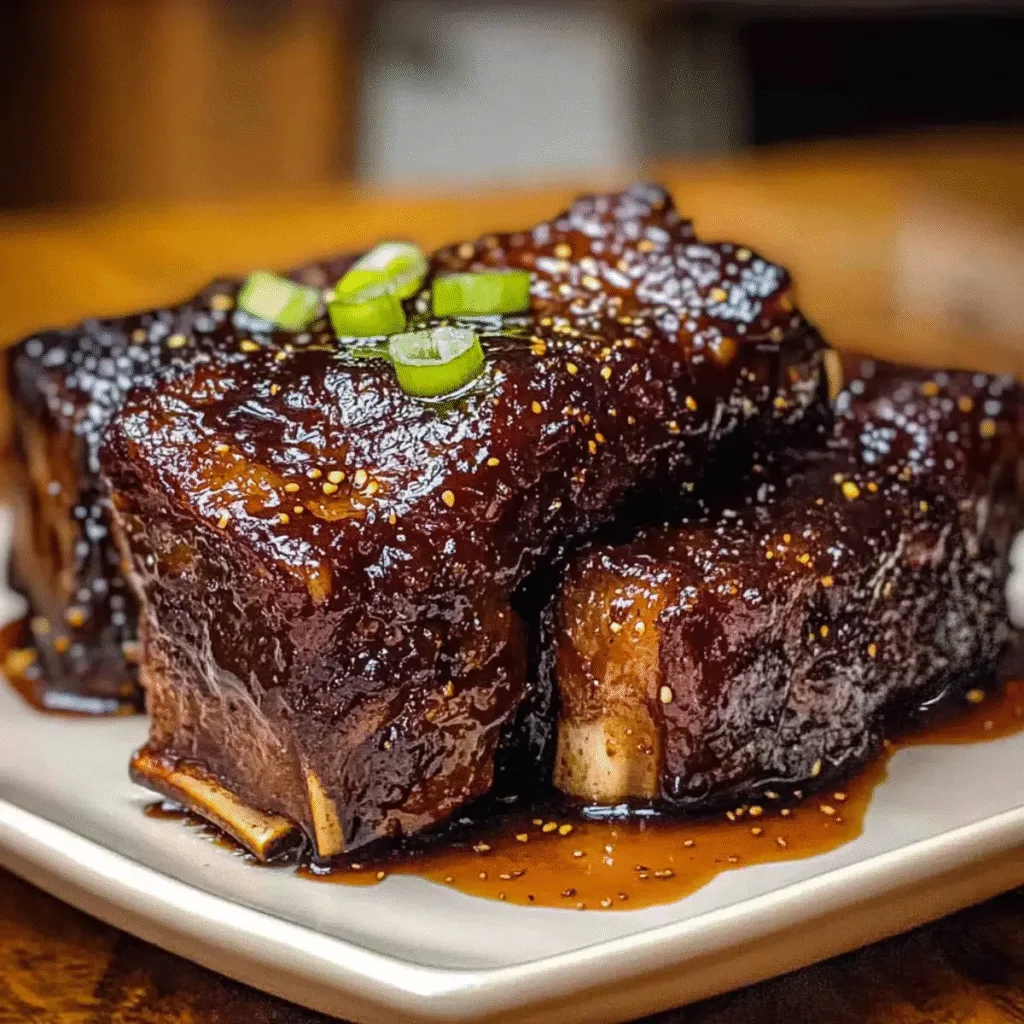
- Masterful Caramelization – The combination of brown sugar and hoisin creates a natural glaze that bubbles into a rich, dark lacquer under the broiler.
- Complex Aromatics – Using mirin and soy sauce creates a quintessential Asian-inspired flavor profile that balances salt, sweetness, and acidity.
- One-Pot Efficiency – While it requires time, the actual effort is minimal, making it an excellent “set it and forget it” meal for weekend dinners.
- Versatile Serving Options – The glossy, reduced glaze is perfectly designed to coat jasmine rice, steamed bok choy, or chewy rice noodles.
Ingredients You’ll Need
The Protein & Aromatics
- 4 pieces Bone-in Beef Short Ribs – Choose well-marbled cuts; the fat rendering during the slow roast is essential for flavor and moisture.
- 1 small Onion – Sliced; acts as a flavor foundation that breaks down into the braising liquid.
- 2-3 Green Onions – Cut into 2-inch segments; used as a fresh, crisp garnish to cut through the richness.
The Marinade
- 1/2 cup Soy Sauce – Provides the salty, savory umami backbone; tamari can be substituted for a gluten-free version.
- 1/4 cup Hoisin Sauce – Adds a thick, sweet, and tangy complexity that helps thicken the sauce later.
- 1/4 cup Mirin – A Japanese sweet rice wine that adds depth and a subtle, glossy finish.
- 1/4 cup Brown Sugar – Essential for the final caramelization stage and balancing the salt.
- 4 cloves Garlic – Minced; adds a pungent, aromatic warmth.
- 1 tbsp Fresh Ginger – Grated; provides a bright, spicy note that cuts through the fat of the short ribs.
- 1/2–1 tsp Chili Flakes or Sriracha – Adds a gentle, customizable heat to balance the sweetness.
The Glaze Thickener
- 1 tsp Cornstarch mixed with 1 tbsp water – A cornstarch slurry that gives the final glaze a restaurant-quality, coat-the-back-of-a-spoon consistency.
Step-by-Step Instructions
Prep the Ribs Trim any excess surface fat from the ribs and pat them thoroughly dry with paper towels to ensure a better sear. Season generously with salt and pepper to establish the first layer of flavor.
Sear the Ribs Heat a heavy-bottomed skillet over medium-high heat with a neutral oil. Sear each side of the short ribs for 5-7 minutes until a deep, mahogany crust forms—this Maillard reaction is critical for flavor depth.
Prepare the Marinade In a medium bowl, whisk together the soy sauce, hoisin, mirin, brown sugar, garlic, ginger, and chili flakes until the sugar is fully dissolved.
Roast the Ribs
Transfer the seared ribs into a Dutch oven, pour the marinade over them, and scatter the sliced onions around the meat. Cover tightly and roast at 275°F to 300°F (135°C–150°C) for 3 to 4 hours, basting the ribs periodically to keep them moist.
Reduce the Glaze Remove the ribs carefully from the Dutch oven. Transfer the remaining braising liquid to a skillet, stir in the cornstarch slurry, and simmer for 10-15 minutes until the sauce reduces into a thick, syrupy glaze.
Broil and Garnish Place the ribs on a baking sheet and broil on high for 2-3 minutes; keep a close watch to ensure the sugars caramelize without burning. Drizzle with the reduced glaze and garnish with fresh green onions and sesame seeds before serving.
Recipe Notes & Tips
- The Power of Marinating – If time permits, marinate the ribs for 2 to 12 hours in the refrigerator before searing; this allows the ginger and garlic to penetrate deep into the bone structure.
- Monitoring Temperature – If the ribs look dry during roasting, add a splash of beef broth or water to the Dutch oven to ensure the braising environment remains humid.
- Rendering Fat – Don’t be afraid to leave some fat on the ribs; short ribs are prized for their high fat content, which renders down to provide the “melt-in-your-mouth” texture.
- The Skim Technique – After roasting, there may be a layer of fat on top of your braising liquid. Use a spoon to skim this off before turning the liquid into the final glaze.
- Don’t Rush the Broil – The sugars in the brown sugar and hoisin can go from caramelized to burnt in seconds; stay by the oven and use the broiler with caution.
Nutritional Information
- Prep Time: 30 minutes
- Cook Time: 4 hours
- Resting Time: 10 minutes
- Total Time: 4 hours 40 minutes
- Servings: 4 ribs
- Calories: 450 kcal per serving (Note: This is an estimate based on lean portions; total intake may vary by cut size).
Perfect Pairings
- Steamed Jasmine Rice – The neutral, floral profile of jasmine rice is perfect for absorbing the sticky, sweet glaze.
- Quick-Pickled Cucumber Salad – The sharp, cold acidity of vinegar-pickled cucumbers provides a refreshing contrast to the warm, fatty ribs.
- Stir-Fried Baby Bok Choy – A simple, garlicky green vegetable adds necessary bitterness and texture.
- Toasted Sesame Seeds – A simple, essential garnish that adds a subtle nutty crunch and visual appeal.
Ideal Occasions
- Sunday Dinner Traditions – The long cook time makes this a perfect meal for a slow weekend afternoon when the kitchen can smell like ginger and soy.
- Dinner Parties – The “wow” factor of a perfectly glazed, tender rib makes this a sophisticated main course that looks like it took hours of active work.
- Lunar New Year Celebrations – The rich, dark colors and deep savory flavors align perfectly with traditional celebratory menus.
- Fall and Winter Gatherings – The warming spices and slow-braised nature make this an ultimate cold-weather comfort food.
Storage & Serving Tips
- Resting is Mandatory – Allow the ribs to rest for 10 minutes before serving; this lets the internal juices redistribute and ensures the meat remains tender.
- Refrigeration – Store leftovers in an airtight container for up to 3 days; the flavor often improves the next day as the spices continue to marinate the meat.
- Reheating – Reheat slowly in a covered dish in the oven at 300°F with a tablespoon of water added to prevent the sauce from becoming too tacky or burnt.
- Avoid Freezing – While technically possible, the texture of the braised meat can become fibrous if frozen and thawed; it is best served fresh.
Creative Variations to Try
- Star Anise Infusion – Add 1 or 2 whole star anise to the Dutch oven while roasting for a subtle, liquorice-like complexity.
- Citrus Zest Swap – Replace the orange notes with the zest of a lime or a Kaffir lime leaf for a more vibrant, aromatic finish.
- Root Vegetable Bed – Add chunks of carrots or daikon radish into the Dutch oven with the ribs to create a one-pot meal where the vegetables absorb the savory glaze.
- Spicy Heat Escalation – Double the chili flakes or add a tablespoon of Doubanjiang (spicy bean paste) to the marinade for a Sichuan-style depth.
Troubleshooting Common Issues
- Tough Ribs – This usually means they haven’t been roasted long enough; if the meat doesn’t pull away easily with a fork, return them to the oven for another 30-45 minutes.
- Sauce Isn’t Thickening – Ensure you have used the cornstarch slurry and that the liquid is reaching a true simmer; evaporation is key to achieving a “glaze” consistency.
- Meat Looks Grey – You likely skipped the searing step; the browning stage is vital not just for flavor, but for visual appeal and the creation of fond (browned bits) in the pan.
- Excessively Salty – If the braising liquid becomes too reduced and salty, whisk in a tablespoon of honey or a splash of water to balance the flavor.
Why This Recipe Works
The science here is hydrolysis and reduction. During the 4-hour roast, the collagen in the short ribs breaks down into gelatin, which gives the meat its characteristic “melt-in-your-mouth” texture. Simultaneously, the sugars in the marinade undergo non-enzymatic browning (Maillard reaction) and caramelization during the broiling step. By separating the glaze reduction from the roast, you control the concentration of sugars and salt, ensuring a sticky finish that doesn’t overwhelm the delicate flavor of the beef.
Final Thoughts
These Caramelized Slow Roast Asian Beef Short Ribs are a testament to the power of patience in the kitchen. By allowing the heat to work slowly on the connective tissue and carefully balancing the sweet and salty elements of the marinade, you create a dish that is deeply comforting and undeniably impressive. It is a meal that rewards planning and offers a distinct, restaurant-quality experience right at your own dining table.