Crispy Lemon Pepper Wings
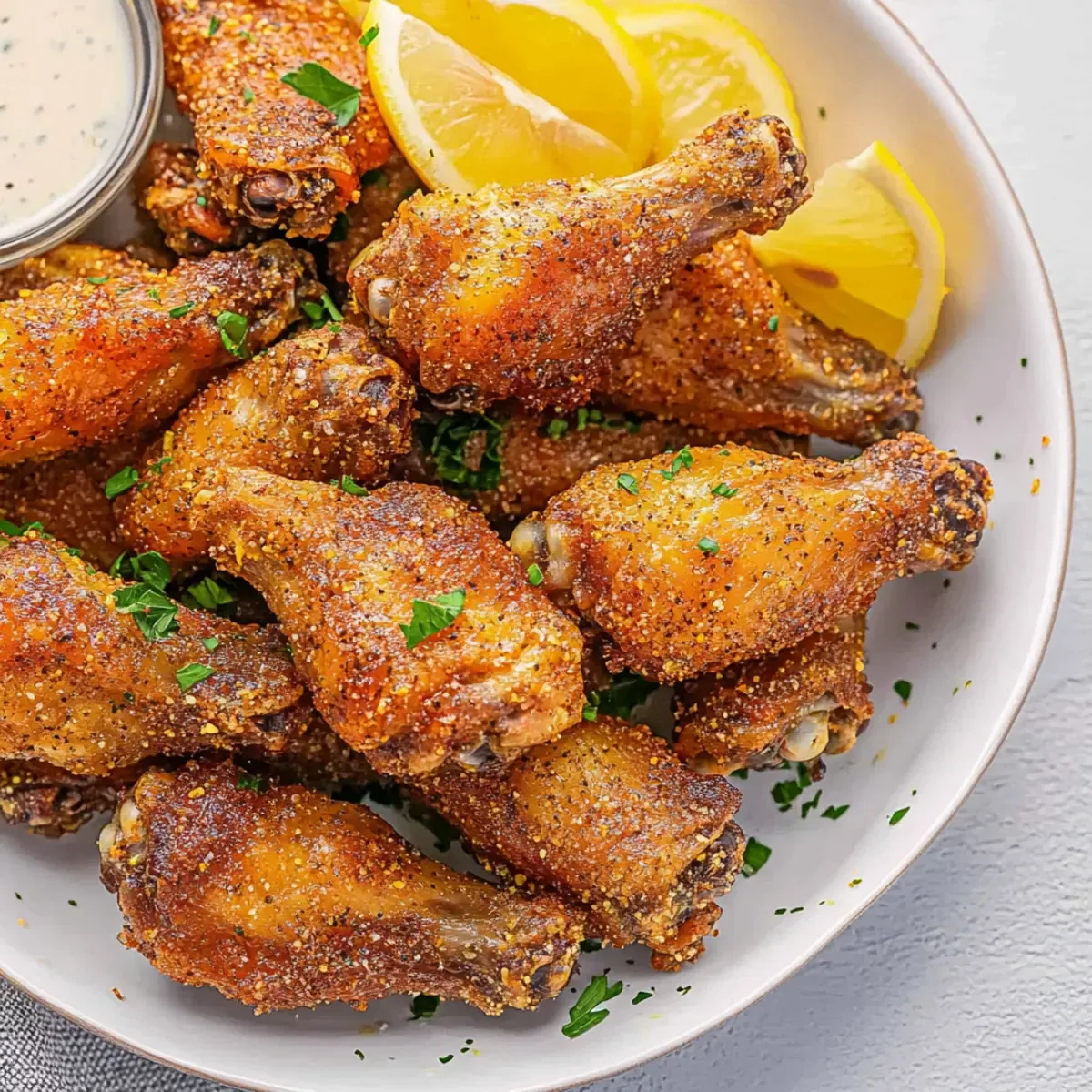
Crispy Lemon Pepper Wings deliver the crunch and bold citrus-pepper flavor of a restaurant-quality wing through an entirely oven-based method that requires no deep fryer, no oil bath, and no complicated technique — just one ingredient that changes everything. Baking powder, applied directly to the dry-rubbed wings before roasting, is the secret behind the exceptionally crispy, golden skin that emerges from a 425°F oven after nearly an hour of high-heat roasting, working by raising the skin’s pH to accelerate browning and drawing moisture out to produce a shatter-crisp exterior. A simple two-ingredient lemon pepper butter sauce tossed on at the finish keeps the coating bright, buttery, and vibrant without softening the crust that the long oven time worked to build.
Why You’ll Love This Recipe
- Baking Powder Is the Crispy Skin Secret – A single tablespoon of baking powder mixed into the spice rub is the technique detail that produces genuinely restaurant-quality crispy skin from a home oven, working by altering the skin’s surface chemistry to promote rapid, even browning without any added fat or frying.
- No Deep Fryer, No Mess – The entire recipe is executed on a single parchment-lined baking sheet in a standard oven, producing a result that rivals fried wings without the oil, the splatter, or the safety concerns of home deep frying.
- The Sauce Goes On After Cooking, Not Before – Tossing the wings in butter and lemon juice only after they come out of the oven preserves the hard-won crispy skin through the entire cook time and keeps the citrus bright and fresh rather than cooked out and muted.
- Only 5 Minutes of Active Prep – Patting the wings dry and tossing them in the spice mixture takes less than 5 minutes; everything after that is oven time requiring no attention beyond flipping once at the midpoint.
- Genuinely Low Calorie for a Wing – At 196 calories per wing with 12 grams of protein and only 3 grams of carbohydrates, these are among the more nutritionally efficient wing preparations available — the oven method eliminates the calorie load of frying oil entirely.
- Endlessly Riff-able Base Technique – Once the baking powder crispy skin method is understood, the spice rub and finishing sauce are completely interchangeable — the same wings can become buffalo, honey garlic, or dry-rubbed with nothing more than a swap of the final toss ingredients.
Ingredients You’ll Need
Wings
- 1 lb chicken wings – the protein base; split into flats and drumettes for even cooking and easy eating, or left whole if preferred; the surface-area-to-thickness ratio of wings makes them ideal for the baking powder crispy skin technique.
- 1 tbsp baking powder – the critical technique ingredient that produces the crispy skin; its alkaline pH raises the skin surface’s browning potential and its moisture-absorbing properties pull residual water out of the skin during roasting, allowing it to dehydrate and crisp rather than steam.
- ½ tsp black pepper – adds gentle heat and aroma to the dry rub that complements the lemon pepper sauce applied at the finish.
- ½ tsp smoked paprika – contributes a subtle smokiness and deep red-orange color to the dry rub that develops into a beautifully colored, caramelized exterior during the high-heat bake.
- ½ tsp garlic powder – adds savory depth to the dry rub that carries through the roasting process and pairs naturally with the butter in the finishing sauce.
- ½ tsp onion powder – reinforces the savory base of the dry rub with a mellow, sweet allium note that rounds out the spice blend without asserting a distinct flavor of its own.
- 2 tsp lemon pepper seasoning – the defining flavor of both the dry rub and the finished wing; applied before baking and echoed in the sauce, it ensures the lemon-pepper character is present throughout the entire wing rather than only on the surface.
Lemon Pepper Butter Sauce
- 2 tbsp unsalted butter, melted – the fat base of the finishing sauce that coats the crispy wings in a rich, glossy layer and carries the lemon flavor across every surface; unsalted allows the lemon pepper seasoning’s salt content to define the overall seasoning without risk of over-salting.
- 2 tsp lemon juice – the fresh citrus element that brightens the butter sauce and reinforces the lemon pepper seasoning with a clean, natural acidity; applied post-bake so the volatile citrus aromatics remain vivid rather than being cooked out.
Step-by-Step Instructions
Step 1: Preheat and Prepare — Set the oven to 425°F and allow it to come fully up to temperature before the wings go in — a properly preheated oven is essential for the initial burst of high heat that begins the skin-crisping process. Remove the chicken wings from the refrigerator and pat them thoroughly dry on all surfaces with paper towels, including between any folds of skin. This is the single most important prep step: any remaining surface moisture will steam in the oven rather than crisp, and no amount of baking powder can compensate for wet skin.
Step 2: Mix the Dry Rub — Combine the baking powder, black pepper, smoked paprika, garlic powder, onion powder, and lemon pepper seasoning in a small bowl or ramekin and stir until fully mixed. The baking powder must be evenly distributed throughout the spice mixture so it makes uniform contact with the skin across every wing rather than concentrating in patches that would produce uneven crisping.
Step 3: Season the Wings — Sprinkle the dry rub mixture over the patted-dry wings and toss to coat every surface — top, bottom, and sides — with an even layer of the seasoned baking powder mixture. The coating should be light and even rather than thick; excess baking powder that doesn’t contact the skin directly can leave a slightly chalky taste on the finished wing.
Step 4: Arrange on the Baking Sheet — Line a baking sheet with parchment paper or, for maximum airflow and crispiness, place a wire cooling rack on top of the lined baking sheet and arrange the wings on the rack in a single layer with space between each piece. The cooling rack elevates the wings so hot air circulates underneath and the fat renders and drips away from the skin rather than pooling beneath it and causing the underside to steam rather than crisp.
Step 5: Bake the First Side — Place the wings in the preheated 425°F oven and bake for 20 to 25 minutes until the underside is golden and the skin is beginning to crisp visibly at the edges. Do not open the oven door during this stage — maintaining a consistent oven temperature throughout the first side is important for even, progressive skin dehydration.
Step 6: Flip and Finish Baking — Remove the baking sheet from the oven, flip each wing carefully using tongs, and return to the oven for a further 20 to 25 minutes until both sides are deeply golden, the skin is visibly crispy and taut, and the internal temperature has reached 165°F. For an extra golden finish, switch the oven to broil for the final 2 to 3 minutes, watching closely to prevent burning.
Step 7: Make the Sauce — While the wings are in their final minutes of baking, combine the melted unsalted butter and fresh lemon juice in a bowl large enough to toss the wings in. Stir to combine — the sauce is intentionally simple, allowing the lemon pepper seasoning already on the wings to provide the primary flavor while the butter adds richness and the lemon juice adds fresh brightness.
Step 8: Toss and Serve — Remove the wings from the oven and transfer immediately to the bowl with the lemon butter sauce. Toss to coat every wing evenly and serve at once while the skin is at its crispiest. The window between perfectly crispy and sauce-softened skin is short — have the sauce ready, the serving platter out, and guests assembled before the wings come out of the oven.
Recipe Notes & Tips
- Dry Wings Are the Non-Negotiable Foundation – Baking powder can only crisp skin that is already dry. Any remaining surface moisture generates steam in the oven that prevents the skin from dehydrating and crisping properly. Pat every surface thoroughly and, if time allows, leave the seasoned wings uncovered on a rack in the refrigerator for 1 to 8 hours before baking — this extended drying period produces noticeably superior crispiness.
- Use Baking Powder, Not Baking Soda – These are not interchangeable in this recipe. Baking soda is approximately four times stronger than baking powder and will produce an unpleasant, metallic, soapy flavor on the wing skin at the quantities used here. Baking powder is the correct ingredient.
- The Cooling Rack Upgrade Is Worth It – Baking on a wire rack elevated above the sheet pan is the difference between wings that are crispy on top and soggy on the bottom versus wings that are evenly crispy on all sides. If you have a cooling rack that fits your baking sheet, always use it for wings.
- Do Not Sauce Until Completely Ready to Serve – The lemon butter sauce will begin softening the crispy skin within minutes of contact. Toss the wings only when every guest is seated and ready to eat — wings that sit in sauce for even 5 minutes lose a significant portion of the skin texture the oven time worked to build.
- Broiling for the Final Minutes Is Worth the Attention – Two to three minutes under the broiler at the end of baking pushes the skin color and crispiness to a level that standard oven baking alone cannot quite match, producing a deeply golden, almost fried-looking exterior. Watch continuously — broiler temperatures vary and the wings can go from perfect to burnt in under a minute.
- Aluminum-Free Baking Powder Prevents Off-Flavors – Some baking powders contain sodium aluminum sulfate, which can impart a metallic taste at higher quantities. Using an aluminum-free variety — widely available in most supermarkets — eliminates any risk of this flavor in the finished wing.
Nutritional Information
- Prep Time: 5 minutes
- Cook Time: 50 minutes
- Total Time: 55 minutes
- Servings: 4 wings
- Calories: 196 kcal per wing
- Fat: 16 g | Carbohydrates: 3 g | Fiber: 1 g | Sugar: 0.1 g | Protein: 12 g | Sodium: 49 mg
Nutritional values are per individual wing and reflect the recipe as written. Sodium will increase based on the sodium content of the specific lemon pepper seasoning brand used.
Perfect Pairings
- Classic Celery and Carrot Sticks with Ranch or Blue Cheese – The cool, crisp vegetables and creamy dipping sauce provide the traditional American wing accompaniment that cuts through the richness of the butter sauce and refreshes the palate between bites.
- Crispy Oven Fries or Wedges – A natural side that shares the oven-baked format of the wings; season with the same lemon pepper spice blend to create a cohesive flavor theme across the entire plate.
- Simple Coleslaw – A lightly dressed, acidic coleslaw provides creamy crunch and tangy contrast that balances the richness of the butter sauce and the intensity of the lemon pepper seasoning particularly well.
- Cold Lager or Sparkling Lemonade – A cold, light lager complements the citrus and pepper notes without competing; sparkling lemonade reinforces the lemon character of the wings and provides a refreshing, non-alcoholic alternative that mirrors the dish’s flavor profile.
Ideal Occasions
- Game Day and Sports Watching Gatherings – The wing format is inherently designed for casual, shared eating around a television, and the oven-baked method means a full sheet pan can be ready simultaneously without the logistics of batched deep frying.
- Weeknight Dinner with Minimal Cleanup – A single baking sheet, a ramekin, and a mixing bowl constitute the entire cleanup for this recipe — a practical virtue for a weeknight dinner that produces impressive results without the effort or mess of more complex preparations.
- Appetizer for Casual Entertaining – Served on a platter with dipping sauces and vegetable sticks, these wings function as a substantial, crowd-pleasing appetizer that requires no last-minute attention from the host once they go into the oven.
- Meal Prep for the Week – The wings reheat well and retain enough crispiness when reheated correctly to serve as satisfying lunches or light dinners throughout the week, making a double batch on Sunday a practical time investment.
Storage & Serving Tips
- Refrigerator Storage – Store cooled leftover wings in an airtight container for up to 3 days. Do not store them already tossed in the butter sauce — store plain and re-sauce after reheating to preserve the best possible skin texture.
- Reheating for Maximum Crispiness – Reheat on a wire rack over a baking sheet in a 400°F oven for 10 to 12 minutes, or in an air fryer at 375°F for 5 to 7 minutes. Both methods restore significant crispiness to the skin. Microwave reheating produces a soft, steamed result and is not recommended.
- Freezing Cooked Wings – Baked wings freeze well for up to 2 months. Cool completely, freeze in a single layer on a baking sheet until solid, then transfer to a freezer bag. Reheat directly from frozen in a 400°F oven for 18 to 22 minutes, flipping once.
- Sauce Separately for Parties – When serving to a group where guests may return for seconds over an extended period, hold the lemon butter sauce in a small warm bowl on the side and let guests toss their own portions to order — this keeps the remaining wings crispy on the platter far longer than pre-saucing the entire batch.
Creative Variations to Try
- Honey Lemon Pepper – Add 1 tablespoon of honey to the butter and lemon juice sauce for a sweet-and-citrus finishing glaze that caramelizes slightly against the hot wing skin and introduces a sticky, more indulgent coating that balances the pepper’s heat.
- Parmesan Lemon Pepper – Toss the sauced wings in 3 tablespoons of freshly grated Parmesan immediately after the butter toss for a cheesy, salty crust that adheres to the hot skin and adds a nutty, savory dimension to the lemon pepper profile.
- Buffalo Lemon Pepper Hybrid – Mix equal parts Frank’s RedHot and melted butter as the finishing sauce in place of the straight lemon butter, then add the lemon juice and lemon pepper seasoning on top for a fusion wing that combines the tang of classic buffalo sauce with the citrus brightness of lemon pepper.
- Air Fryer Adaptation – Cook the seasoned wings in a single layer in an air fryer at 400°F for 20 to 25 minutes, flipping halfway through, for an even faster route to crispy skin that produces results comparable to the oven method in nearly half the time.
Troubleshooting Common Issues
- Skin is not crisping despite baking powder – The wings were not dried thoroughly enough before seasoning, or the oven temperature dropped when the cold wings were added. Pat wings completely dry — including any folds in the skin — and allow the oven to fully reheat after loading before starting the timer.
- Wings have a slightly chalky or bitter aftertaste – Too much baking powder was used, or it was not evenly distributed and concentrated in patches. Measure precisely and mix the baking powder thoroughly with the other spices before applying — the taste issue comes from uneven distribution rather than the ingredient itself, assuming baking powder rather than baking soda was used.
- Bottom of wings is soggy – The wings were baked directly on the parchment rather than on an elevated wire rack, trapping rendered fat and steam beneath the skin. A wire cooling rack placed over the baking sheet is the reliable solution to this specific problem.
- Sauce is softening the skin too quickly – The butter sauce was applied too heavily or too early. Use a light toss — just enough to coat each wing in a thin layer — and serve within 2 minutes of saucing. A thicker, heavier sauce application will always compromise crispy skin more rapidly than a light, even coat.
Why This Recipe Works
The science behind this recipe’s signature crispiness is straightforward once understood: baking powder is alkaline, and raising the pH of the chicken skin surface accelerates the Maillard reaction — the chemical browning process responsible for the golden color and complex roasted flavors that develop on any protein at high heat. At normal skin pH, browning is relatively slow even at 425°F; the baking powder’s alkalinity lowers the activation energy required for the browning reactions, producing a deeper golden color and crispier texture in the same oven time than would be achieved without it. Simultaneously, baking powder is mildly hygroscopic — it draws moisture from the skin surface to the exterior where it can evaporate, rather than allowing it to remain trapped beneath the skin where it would steam and prevent crisping. The 425°F oven temperature is specifically chosen to provide sufficient heat to drive off that moisture rapidly and brown the skin aggressively while still cooking the wing through safely in approximately 50 minutes. Applying the butter and lemon juice sauce after baking rather than before is the other critical technique decision: any oil-based sauce applied before baking would interfere with the skin’s direct contact with the hot air and prevent the dehydration the baking powder initiates, while post-bake application preserves the full crispy structure and keeps the lemon juice’s volatile citrus aromatics bright and vivid rather than cooked flat. At 196 calories per wing with 12 grams of protein and virtually no carbohydrates beyond the spice rub, these wings achieve their impressive result without the 50 to 100 additional calories per wing that deep-frying in oil would add.
Final Thoughts
Crispy Lemon Pepper Wings prove that the oven, used correctly, is fully capable of producing the crispy skin and bold flavor that most home cooks assume require a deep fryer. The baking powder technique is the single most valuable piece of knowledge in this recipe — once applied, it changes the way any home cook approaches every future batch of baked wings regardless of the flavor direction. The lemon pepper profile is bright, clean, and broadly appealing, and the 5-minute prep makes the 50-minute bake time feel entirely passive rather than effortful. At 196 calories per wing with a minimal ingredient list and a single baking sheet to wash, this is one of the more efficient impressive wing recipes available for any skill level. For those who want to push the crispiness even further, the overnight uncovered refrigerator rest for the seasoned wings is the one additional step that takes the result from very good to genuinely exceptional.