Tuscan White Bean Skillet
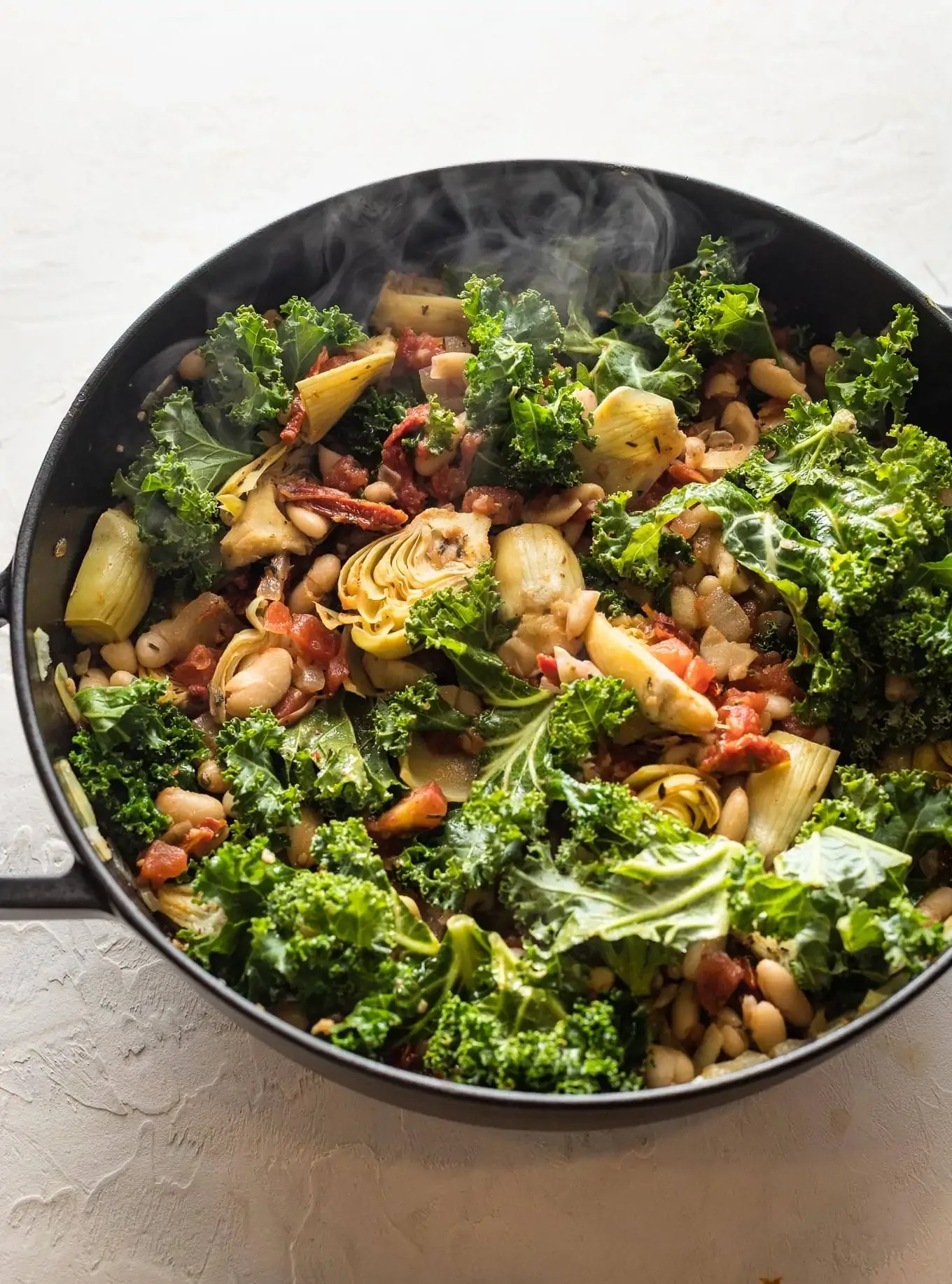
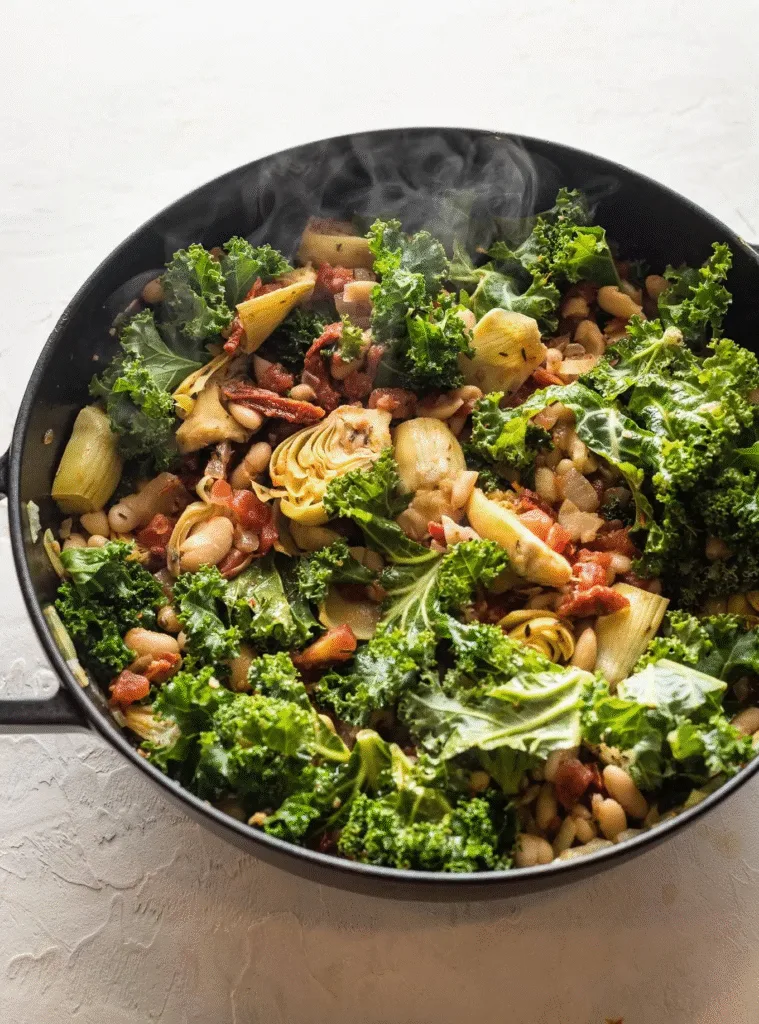
This Tuscan White Bean Skillet is a hearty meatless meal built around creamy cannellini beans, juicy tomatoes, artichoke hearts, sun-dried tomatoes, aromatic herbs, and tender kale. Everything cooks in one skillet in about 30 minutes, creating a rustic Italian-inspired dinner with plenty of fiber and plant-based protein that is especially good served with crusty bread.
Why You’ll Love This Recipe
- Ready in 30 Minutes – Just 10 minutes of preparation and about 20 minutes of cooking make this practical for busy weeknights.
- One-Skillet Meal – The entire dish comes together in a single pan, keeping both cooking and cleanup straightforward.
- High in Fiber – Cannellini beans, artichokes, tomatoes, and kale provide nearly 15 grams of fiber per serving.
- Satisfying Without Meat – White beans contribute approximately 16 grams of protein per serving while giving the skillet a hearty texture.
- Pantry-Friendly Ingredients – Canned beans, tomatoes, artichokes, dried herbs, and sun-dried tomatoes make this easy to prepare without extensive shopping.
- Naturally Versatile – Kale can be replaced with spinach or another leafy green, while fire-roasted tomatoes can provide a deeper flavor.
Ingredients You’ll Need
For the White Bean Skillet
- 1 tablespoon extra-virgin olive oil – Provides the cooking fat for the aromatics while contributing classic Mediterranean flavor.
- 1 large onion, diced, about 1½ cups – Creates the savory aromatic foundation and develops natural sweetness as it softens.
- ½ cup oil-packed sun-dried tomatoes, drained and roughly chopped – Add concentrated tomato flavor, sweetness, acidity, and umami.
- 4 garlic cloves, minced – Provide pungent aromatic depth that complements the beans and herbs.
- 2 (14.5-ounce) cans cannellini beans, drained and rinsed – Form the protein-rich base of the skillet and contribute a soft, creamy texture.
- 1 (14.5-ounce) can diced tomatoes – Supplies moisture and acidity while creating the light tomato sauce surrounding the beans.
- 1 (14.5-ounce) can artichoke hearts, drained and roughly chopped – Add tender texture and a subtly tangy, vegetal flavor.
- 1 teaspoon dried oregano – Provides earthy, slightly peppery Mediterranean flavor.
- 1 teaspoon dried thyme – Adds an herbal, savory note that pairs especially well with beans and tomatoes.
- 2 cups kale, chopped – Adds color, texture, fiber, and nutrients while wilting directly into the skillet.
- Salt, to taste – Enhances the vegetables, beans, and herbs.
- Freshly ground black pepper, to taste – Adds gentle heat and aromatic complexity.
Step-by-Step Instructions
Step 1: Prepare the Ingredients
Drain and rinse the cannellini beans, drain and roughly chop the artichoke hearts, and drain and chop the sun-dried tomatoes. Dice the onion, mince the garlic, and remove any tough kale stems before chopping the leaves.
Step 2: Heat the Olive Oil
Warm 1 tablespoon extra-virgin olive oil in a large skillet over medium heat. Allow it to heat until shimmering but not smoking.
Step 3: Soften the Onion
Add the diced onion and cook for 3–4 minutes, stirring periodically. The onion should soften and become slightly translucent without developing excessive browning.
Step 4: Add the Aromatics
Stir in the chopped sun-dried tomatoes and minced garlic. Cook for approximately 60 seconds, stirring frequently, until the garlic becomes fragrant.
Step 5: Build the Skillet
Add the drained cannellini beans, diced tomatoes with their juices, chopped artichoke hearts, dried oregano, and dried thyme. Stir gently until the ingredients and seasonings are evenly distributed.
Step 6: Cover and Simmer
Keep the skillet over medium heat, cover, and cook for approximately 8 minutes. This short simmer allows the beans to heat through while the tomato juices, herbs, garlic, and sun-dried tomatoes combine into a flavorful sauce.
Step 7: Add the Kale
Remove the lid and add the chopped kale. Fold it through the bean mixture and cook uncovered for another 2–3 minutes, or until the leaves have wilted but still retain their green color.
Step 8: Season and Serve
Taste the skillet before adding salt, since canned ingredients and sun-dried tomatoes can already contain significant sodium. Finish with salt and freshly ground black pepper as needed and serve hot.
Recipe Notes & Tips
- Rinse the Beans Well – Rinsing canned cannellini beans removes excess canning liquid and can reduce some of their surface sodium.
- Watch the Garlic Carefully – Garlic needs only about one minute before the liquid ingredients are added. Browning it excessively can introduce bitterness.
- Use Fire-Roasted Tomatoes for More Depth – Fire-roasted diced tomatoes provide a subtle smoky sweetness that makes the simple sauce taste more developed.
- Add Kale Near the End – Kale only needs a few minutes to wilt. Adding it late prevents it from becoming excessively soft and dull.
- Season After Simmering – Sun-dried tomatoes, beans, canned tomatoes, and artichokes may all contribute salt, so adjust the final seasoning only after the flavors have concentrated.
- Control the Sauce Consistency – For a thicker skillet, simmer uncovered for an additional few minutes. If it becomes too dry, add a small splash of water or vegetable broth.
Nutritional Information
- Prep Time: 10 minutes
- Cooking Time: 20 minutes
- Total Time: 30 minutes
- Servings: 4 main-dish portions
- Calories: Approximately 384 kcal per serving
- Carbohydrates: 52.46g
- Protein: 16.38g
- Fat: 15.08g
- Saturated Fat: 1.83g
- Fiber: 14.67g
- Sugar: 4.62g
- Sodium: 1,057mg
- Potassium: 432mg
- Calcium: 260mg
- Iron: 7.35mg
Nutritional values are estimates and can vary substantially depending on the brands of beans, tomatoes, artichokes, and sun-dried tomatoes used.
Perfect Pairings
- Crusty Italian Bread – Use warm bread to soak up the tomato-rich juices surrounding the beans and vegetables.
- Garlic Toast – Crisp garlic bread provides a contrasting texture and complements the garlic and herb flavors in the skillet.
- Simple Green Salad – A lightly dressed salad adds freshness and acidity without making the meal overly heavy.
- Roasted Vegetables – Roasted zucchini, eggplant, peppers, or cauliflower can turn the skillet into an even more vegetable-forward dinner.
Ideal Occasions
- Busy Weeknight Dinner – The 30-minute cooking time and one-pan preparation make this especially convenient after a long day.
- Meatless Monday – Beans provide enough protein and fiber to create a satisfying vegetarian main course.
- Pantry-Cleanout Meal – Much of the recipe relies on canned and shelf-stable ingredients that are easy to keep available.
- Casual Family Dinner – Serve the skillet directly from the pan with bread and a simple salad for an uncomplicated meal.
Storage & Serving Tips
- Refrigerate Leftovers – Allow leftovers to cool before transferring them to an airtight container and refrigerate for up to 3–4 days.
- Reheat Gently – Warm leftovers in a skillet over medium-low heat, adding a splash of water or vegetable broth if the beans have absorbed too much liquid.
- Keep Bread Separate – Store bread separately from the skillet so it doesn’t absorb moisture and become soggy.
- Refresh Before Serving – A squeeze of lemon juice, fresh herbs, or drizzle of extra-virgin olive oil can brighten reheated portions.
Creative Variations to Try
- Spinach White Bean Skillet – Substitute baby spinach for the kale and add it during the final minute or two because spinach wilts considerably faster.
- Spicy Tuscan Beans – Add crushed red pepper flakes with the garlic for a gentle chile heat.
- Extra-Vegetable Version – Add sliced mushrooms, zucchini, or bell peppers after the onion and sauté until lightly tender before continuing.
- Creamy White Bean Skillet – Mash a small portion of the cannellini beans into the tomato liquid during simmering to naturally thicken the sauce without adding cream.
Troubleshooting Common Issues
- Skillet Is Too Watery – Remove the lid and simmer for several additional minutes so excess moisture can evaporate and the sauce can concentrate.
- Beans Are Becoming Mushy – Stir gently after adding them and avoid prolonged cooking; canned cannellini beans are already fully cooked.
- Dish Tastes Too Salty – Use low-sodium canned ingredients when possible and avoid adding salt until the very end. A small amount of unsalted beans or extra vegetables can also dilute excessive saltiness.
- Kale Is Too Tough – Remove thick stems, chop the leaves into manageable pieces, and allow them another minute or two to wilt in the covered skillet if necessary.
Why This Recipe Works
This recipe creates significant flavor despite its short cooking time by layering ingredients according to how much cooking they require. Onion is sautéed first to soften its texture and develop sweetness, while garlic and sun-dried tomatoes are added afterward because their concentrated flavors release quickly in hot oil. Cannellini beans bring both starch and protein; as they simmer in the tomato juices, their surfaces absorb the oregano, thyme, garlic, and tomato flavors while their interiors remain creamy. Artichokes contribute acidity and texture, while kale is intentionally added near the end so it wilts without becoming overcooked. Covering the skillet during the main simmer traps steam and encourages rapid, even heating, then uncovering it for the kale provides an opportunity for excess moisture to evaporate. Each serving provides approximately 384 calories, 16 grams of protein, and nearly 15 grams of fiber, making the skillet particularly substantial for a plant-focused meal.
Final Thoughts
Tuscan White Bean Skillet is a practical example of how pantry staples can become a flavorful, nutritionally substantial dinner without meat or lengthy preparation. Cannellini beans provide plant-based protein and fiber, while kale, tomatoes, artichokes, onion, and garlic add a broad range of vegetables and flavors. At roughly 384 calories per serving, it can work as a relatively moderate main course on its own; for an even lighter version, use less oil-packed sun-dried tomato and pair the skillet with a fresh salad instead of a large portion of bread.