Biscoff Butter Cookies
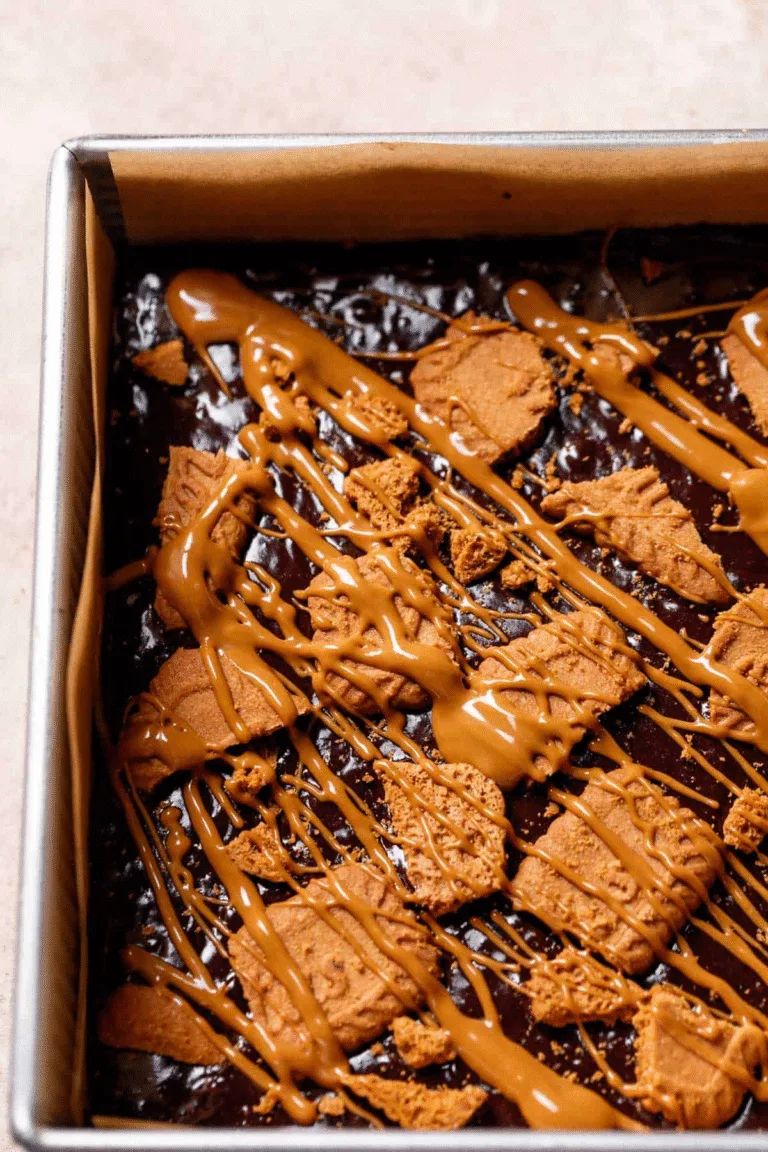
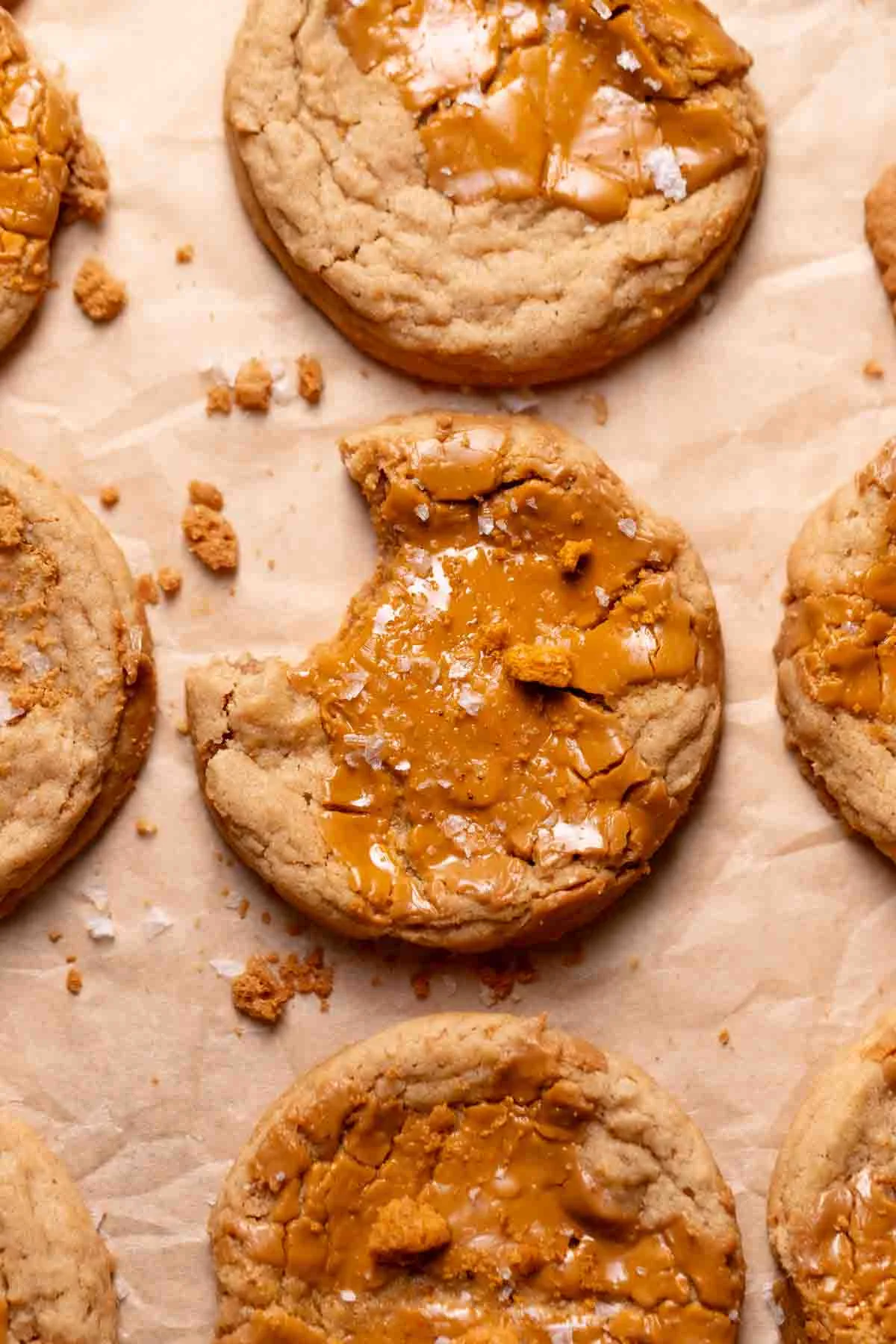
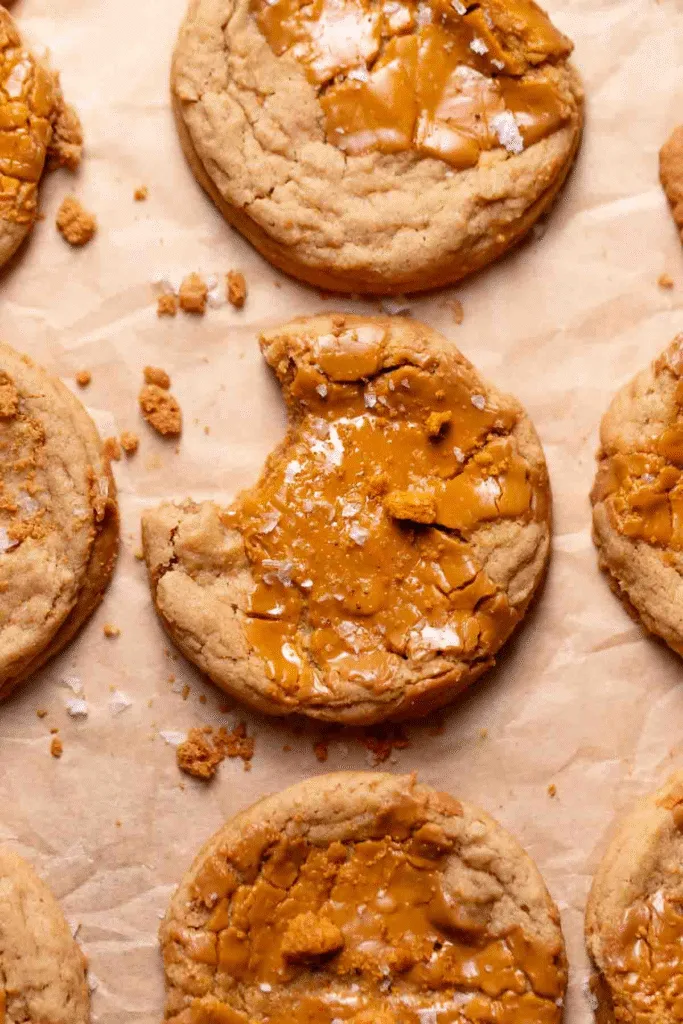
These Biscoff Butter Cookies are soft, chewy, and packed with the warm caramelized spice flavor of cookie butter. Biscoff spread is mixed directly into the dough and spooned over each cookie before baking, creating rich centers, golden edges, and a crackled layer of melted cookie butter on top.
Why You’ll Love This Recipe
- Double Biscoff Flavor – Cookie butter is incorporated into the dough and added again on top for a stronger caramelized speculoos flavor.
- Soft and Chewy Centers – Brown sugar and cookie butter help the cookies retain moisture while the edges become lightly golden.
- Simple Ingredient List – The dough uses familiar baking staples plus Biscoff or Speculoos spread.
- No Complicated Shaping – A large cookie scoop portions the dough quickly and consistently.
- Freezer-Friendly Dough – The portioned cookies can be frozen and baked directly from frozen whenever you want fresh cookies.
- Quick to Bake – Each batch needs only about 10–12 minutes in the oven.
Ingredients You’ll Need
For the Cookie Dough
- ½ cup unsalted butter, room temperature – Provides richness and helps create a soft, tender cookie texture.
- ½ cup Biscoff cookie butter or Speculoos spread – Adds the signature caramelized biscuit flavor, sweetness, fat, and warm spice notes.
- ⅔ cup light brown sugar, packed – Sweetens the cookies while adding molasses flavor and helping maintain chewiness.
- 1 large egg, room temperature – Provides structure, moisture, and binding for the dough.
- 1 teaspoon vanilla extract – Rounds out the caramel and spice flavors of the cookie butter.
- 1½ cups + 1 tablespoon all-purpose flour – Provides the structural foundation of the cookies; accurate measuring is important for proper spreading.
- ½ teaspoon salt – Balances the sweetness and enhances the Biscoff flavor.
- ½ teaspoon baking soda – Provides leavening and encourages spreading and browning.
For the Topping
- Approximately 1 teaspoon additional cookie butter per cookie – Melts and crackles over the surface, intensifying the Biscoff flavor and creating a distinctive finish.
Step-by-Step Instructions
Step 1: Preheat the Oven
Preheat the oven to 350°F (180°C). Line a large baking sheet with parchment paper to prevent sticking and encourage even baking.
Step 2: Cream the Fats and Sugar
Add the room-temperature butter, ½ cup cookie butter, and packed brown sugar to a mixing bowl. Using a paddle attachment, beat on low to medium-low speed until the mixture becomes smooth, lighter, and fluffy.
Step 3: Add the Egg and Vanilla
Mix in the room-temperature egg and vanilla extract. Continue mixing only until the ingredients are completely incorporated and the mixture looks uniform.
Step 4: Add the Dry Ingredients
Add the all-purpose flour, baking soda, and salt. Mix on low speed just until a cohesive cookie dough forms, avoiding unnecessary overmixing once the flour has been incorporated.
Step 5: Portion the Dough
Use a large cookie scoop holding approximately 3 tablespoons to portion the dough onto the parchment-lined baking sheet. Leave approximately 3 inches of space between each cookie to accommodate spreading.
Step 6: Add the Cookie Butter Topping
Spoon approximately 1 teaspoon cookie butter onto the center of each dough ball. There’s no need to spread it completely because it will soften and spread as the cookies bake.
Step 7: Bake the Cookies
Bake at 350°F for 10–12 minutes, or until the edges are lightly golden and the cookie butter topping has melted and developed a crackled appearance.
Step 8: Let the Cookies Set
Allow the freshly baked cookies to remain on the baking sheet briefly after removing them from the oven. They will continue setting as their temperature decreases.
Step 9: Cool Completely
Transfer the cookies carefully to a wire rack and allow them to cool completely before serving.
Recipe Notes & Tips
- Measure the Flour Accurately – Too much flour is one of the easiest ways to produce thick, dry cookies. For the greatest accuracy, weigh it with a kitchen scale or use the spoon-and-level method rather than scooping directly from the flour container.
- Use Room-Temperature Ingredients – Softened butter and a room-temperature egg incorporate more evenly, producing a smoother and more consistent dough.
- Don’t Overmix the Flour – Once flour is added, mix only until no obvious dry patches remain. Excessive mixing can encourage unnecessary gluten development and make the cookies tougher.
- Leave Enough Space Between Cookies – These are large cookies made from roughly 3 tablespoons of dough, so approximately 3 inches between portions gives them room to spread.
- Watch the Edges for Doneness – Remove the cookies when the edges are golden even if the centers still appear somewhat soft. They will continue setting as they cool.
- Both Major Cookie Butter Options Work – Biscoff Cookie Butter and Speculoos-style cookie spread can both be used successfully.
Nutritional Information
- Prep Time: Approximately 15 minutes
- Baking Time: 10–12 minutes per batch
- Cooling Time: Approximately 15–20 minutes
- Total Time: Approximately 40–45 minutes
- Yield: 10 large cookies
- Serving Size: 1 large cookie
- Calories: Approximately 300–350 kcal per cookie
The original recipe does not provide nutritional information, so calories are estimated. The exact amount depends particularly on the brand and quantity of cookie butter used for the topping and the final size of each cookie.
Perfect Pairings
- Cold Milk – The simple, creamy flavor balances the sweet caramelized notes of the cookies.
- Hot Coffee – Coffee’s bitterness provides a pleasant contrast to the rich cookie butter and brown sugar.
- Vanilla Ice Cream – Serve a slightly warm cookie with a scoop of vanilla ice cream for an easy plated dessert.
- Fresh Berries – Strawberries or raspberries provide tartness and freshness that contrast with the rich Biscoff flavor.
Ideal Occasions
- Afternoon Treat – These large cookies pair especially well with coffee or tea.
- Holiday Cookie Platters – Their warm caramel and spice notes fit naturally alongside seasonal baked goods.
- Parties and Gatherings – The crackled Biscoff topping makes them visually distinctive without complicated decorating.
- Make-Ahead Baking – Freeze individual dough portions and bake only as many fresh cookies as you need.
Storage & Serving Tips
- Room-Temperature Storage – Keep cooled cookies in an airtight container at room temperature for 2–3 days.
- Cover the Baking Tray if Needed – The cookies can also remain on the cooled baking sheet if the entire tray is wrapped tightly with plastic wrap.
- Freeze the Dough Portions – Scoop and top the unbaked cookies, freeze them solid on a baking sheet, then transfer them to an airtight freezer-safe container.
- Bake Directly From Frozen – Frozen cookie portions do not need to be thawed; simply add approximately 2–3 minutes to the normal baking time.
Creative Variations to Try
- Biscoff Chocolate Chip Cookies – Fold semisweet or dark chocolate chips into the dough for a chocolate-caramel combination.
- Biscoff Crunch Cookies – Add roughly chopped Biscoff cookies to the dough for extra texture.
- White Chocolate Biscoff Cookies – Mix in white chocolate chunks to emphasize the sweet, caramelized profile.
- Sea Salt Biscoff Cookies – Finish the warm cookies with a small pinch of flaky sea salt to create a stronger sweet-and-salty contrast.
Troubleshooting Common Issues
- Cookies Don’t Spread Enough – Too much flour is a common cause. Measure using a kitchen scale or carefully spoon and level the flour.
- Cookies Spread Too Much – The butter may have been excessively warm or the dough unusually soft. Briefly chilling the portioned dough can help control spreading.
- Cookies Turn Out Dry – Excess flour or overbaking is usually responsible. Measure carefully and remove the cookies once their edges are golden.
- Cookies Become Hard After Cooling – They may have remained in the oven too long. The centers should still be soft when the cookies are initially removed because residual heat continues cooking them.
Why This Recipe Works
The texture of these cookies comes from balancing butter, cookie butter, brown sugar, egg, and flour. Butter provides richness and promotes spreading, while Biscoff spread contributes additional fat, sugar, and finely ground cookie solids that intensify the characteristic caramelized flavor. Brown sugar contains molasses and attracts moisture, helping the centers remain softer and chewier than they would with granulated sugar alone. Baking soda encourages spreading and browning, while the egg supplies enough protein to establish structure as the cookies bake. The additional spoonful of cookie butter on each portion melts across the surface under oven heat and then develops its distinctive crackled appearance as the cookie cools. Because these are intentionally large, rich cookies containing both butter and cookie spread, each is estimated at roughly 300–350 calories.
Final Thoughts
Biscoff Butter Cookies turn the familiar caramelized flavor of speculoos biscuits into a soft, chewy bakery-style cookie with an extra layer of melted cookie butter on top. They’re straightforward to prepare, bake in just 10–12 minutes, and can be frozen as individual dough portions for fresh cookies on demand. These are naturally an indulgent dessert, but smaller dough portions can be used when you want more modest servings; just begin checking them earlier in the oven because smaller cookies will bake faster.