Easy Carrot Cake
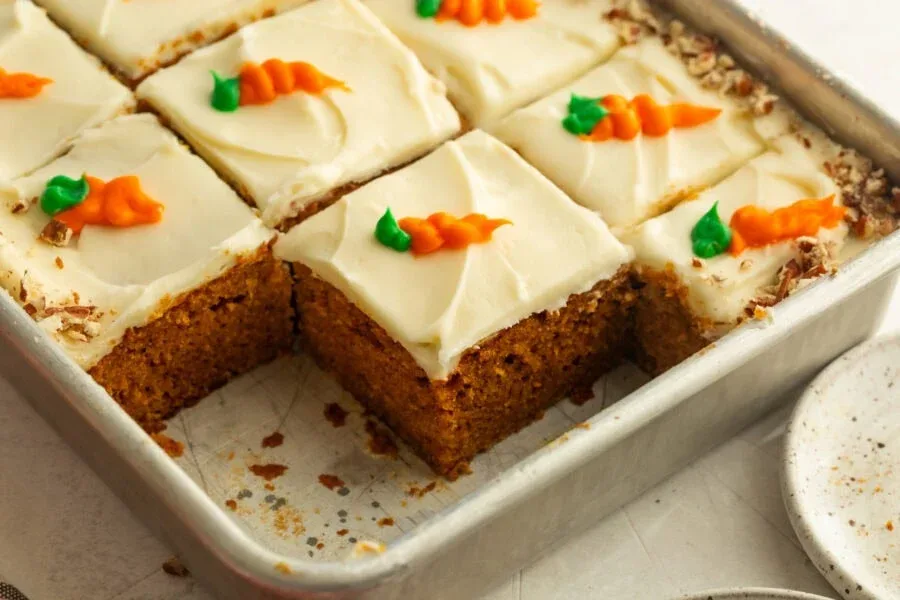
This Easy Carrot Cake is soft, moist, warmly spiced, and finished with a generous layer of classic cream cheese frosting. Instead of relying on freshly grated carrots, the recipe uses carrot baby food or smooth carrot puree, which distributes moisture evenly throughout the batter and helps produce a tender, consistent crumb with very little prep work.
Why You’ll Love This Recipe
- Exceptionally Moist Texture – Vegetable oil and carrot puree provide plenty of moisture, helping the cake stay soft even after refrigeration.
- Simple Mixing Method – The batter comes together in one bowl with straightforward ingredients and no complicated creaming or folding technique.
- Convenient Carrot Shortcut – Carrot baby food or puree eliminates peeling and grating while still contributing natural sweetness, color, and moisture.
- Warm Cinnamon Flavor – Two teaspoons of cinnamon give the cake a classic spiced profile without overwhelming the carrot flavor.
- Easy 9×13 Presentation – Baking in a rectangular pan makes the cake simple to frost, transport, and portion for a crowd.
- Classic Cream Cheese Frosting – The tangy frosting balances the sweetness of the cake and creates the familiar carrot-cake finish.
Ingredients You’ll Need
For the Cake
- 4 large eggs – Provide structure, richness, and emulsification while helping bind the oil and other ingredients into a cohesive batter.
- 2½ cups all-purpose flour – Forms the structural base of the cake and supports the substantial amount of moisture from the oil and carrot puree.
- 2 cups granulated sugar – Sweetens the cake while also contributing moisture and tenderness.
- 2 teaspoons baking soda – Provides the primary leavening, helping the dense batter rise and develop a lighter crumb.
- 1 teaspoon salt – Balances the sweetness and strengthens the cinnamon and carrot flavors.
- 1½ cups vegetable oil – Creates a particularly moist crumb and keeps the cake tender even when chilled.
- 2 teaspoons ground cinnamon – Adds the warm spice traditionally associated with carrot cake.
- 1⅔ cups carrot baby food or smooth carrot puree – Supplies carrot flavor, natural sweetness, color, and consistent moisture without requiring grated carrots.
For the Cream Cheese Frosting
- 8 oz cream cheese, softened – Creates the tangy, creamy base of the frosting.
- ½ cup unsalted or salted butter, softened – Adds richness and improves the frosting’s smooth, spreadable consistency.
- 4 cups powdered sugar – Sweetens and thickens the frosting so it holds evenly over the cake.
- 1 tablespoon vanilla extract – Adds aromatic sweetness and rounds out the tanginess of the cream cheese.
Step-by-Step Instructions
Step 1: Preheat the Oven
Preheat the oven to 350°F (175°C). Grease and flour a 9×13-inch baking pan, making sure the corners and sides are evenly coated to prevent sticking.
Step 2: Beat the Eggs
Place the eggs in a large mixing bowl and beat until the yolks and whites are completely combined. You do not need to whip them extensively or incorporate a large amount of air.
Step 3: Add the Dry and Wet Ingredients
Add the flour, granulated sugar, baking soda, salt, vegetable oil, cinnamon, and carrot puree to the eggs. Mix until the ingredients are evenly combined and no large pockets of dry flour remain.
Step 4: Transfer the Batter
Pour the batter into the prepared 9×13-inch pan. Spread it evenly into the corners so the cake bakes to a consistent thickness.
Step 5: Bake the Cake
Bake at 350°F (175°C) for approximately 50 minutes. The cake is ready when the center is set and a toothpick inserted near the middle comes out clean or with only a few moist crumbs attached.
Step 6: Cool Completely
Transfer the pan to a cooling rack and allow the cake to cool completely before frosting. Applying cream cheese frosting to a warm cake can cause it to melt and slide.
Step 7: Prepare the Frosting
Beat the softened cream cheese and butter together until smooth and creamy. Add the powdered sugar and vanilla extract, then continue beating until the frosting is uniform and spreadable.
Step 8: Frost the Cake
Spread the cream cheese frosting evenly over the completely cooled carrot cake. Use an offset spatula or the back of a spoon to create a smooth finish or decorative swirls.
Step 9: Slice and Serve
Cut the cake into 12 generous servings or smaller pieces if serving a larger group. Serve immediately or refrigerate until needed.
Recipe Notes & Tips
- Use Smooth Carrot Puree – The puree should have a soft, uniform consistency without large pieces so it disperses evenly throughout the batter.
- Measure the Flour Carefully – Too much flour can make the finished cake dense or dry. Spoon flour into the measuring cup and level it rather than packing it down.
- Don’t Overmix the Batter – Mix only until everything is combined. Extended mixing after the flour is added can encourage gluten development and create a tougher crumb.
- Check Doneness in the Center – Because this cake contains a substantial amount of oil and puree, the edges may look finished before the center is fully baked.
- Cool Before Frosting – Cream cheese frosting softens very quickly on warm cake, so wait until the cake has reached room temperature.
- Use Softened Frosting Ingredients – Room-temperature cream cheese and butter blend more smoothly and reduce the risk of lumps.
Nutritional Information
- Prep Time: 15 minutes
- Cooking Time: 50 minutes
- Total Time: Approximately 1 hour 5 minutes
- Servings: 12 generous portions
- Serving Size: Approximately 1/12 of the cake
- Calories: Approximately 650–750 calories per serving
The original recipe does not provide complete nutritional values. The calorie range above is an estimate based on the large amount of oil, sugar, and cream cheese frosting and may vary depending on ingredient brands, frosting thickness, and portion size. Cutting the cake into 16 or 20 smaller pieces will significantly reduce the calories per serving.
Perfect Pairings
- Fresh Coffee – The bitterness and roasted flavor of coffee balance the sweetness of the frosting and complement the cinnamon.
- Fresh Berries – Strawberries, raspberries, or blueberries add acidity and freshness alongside the rich cake.
- Vanilla Ice Cream – A small scoop pairs especially well with slightly warm, unfrosted cake or a room-temperature slice.
- Toasted Pecans or Walnuts – Nuts add crunch and a toasted flavor that naturally complements carrot and cinnamon.
Ideal Occasions
- Easter Gatherings – Carrot cake is a classic spring dessert and works particularly well for Easter lunches and dessert tables.
- Family Celebrations – The 9×13 format is easy to transport and portion, making it practical for birthdays and casual gatherings.
- Potlucks – The simple pan presentation requires no elaborate decorating and travels more easily than a layered cake.
- Weekend Baking – The quick preparation and familiar ingredients make this an approachable baking project without requiring advanced cake techniques.
Storage & Serving Tips
- Refrigerate Frosted Cake – Because the frosting contains cream cheese, store the finished cake covered in the refrigerator.
- Keep for Approximately 4–5 Days – Properly refrigerated carrot cake remains moist for several days thanks to the vegetable oil and carrot puree.
- Bring to Room Temperature Before Serving – Allow individual slices to sit out for approximately 15–20 minutes for a softer cake and creamier frosting.
- Cover the Cut Surface – Press plastic wrap against exposed cake edges or use an airtight container to prevent the crumb from drying out during storage.
Creative Variations to Try
- Walnut Carrot Cake – Fold chopped toasted walnuts into the batter for extra texture and nutty flavor.
- Pineapple Carrot Cake – Add a moderate amount of well-drained crushed pineapple for additional fruitiness and moisture.
- Spiced Carrot Cake – Add ground nutmeg, ginger, or cloves alongside the cinnamon for a warmer, more aromatic spice profile.
- Orange Cream Cheese Version – Add finely grated orange zest to the frosting to introduce a fresh citrus note that complements the carrot and cinnamon.
Troubleshooting Common Issues
- Cake Is Dense or Heavy – The batter may have been overmixed or the baking soda may be old. Mix only until combined and make sure your leavening is fresh.
- Center Is Undercooked – The cake may need additional baking time. Continue baking in 5-minute intervals and test the center rather than relying only on the appearance of the edges.
- Frosting Is Too Soft – The cream cheese or butter may be too warm. Refrigerate the frosting briefly, then stir or beat again before spreading.
- Cake Sticks to the Pan – Make sure the pan is thoroughly greased and floured before adding the batter, especially around the corners.
Why This Recipe Works
The key to this Easy Carrot Cake is its high-moisture formulation. Vegetable oil remains liquid at room temperature, which helps keep the crumb soft even after the cake cools, while smooth carrot puree contributes additional water, natural sugars, and finely dispersed plant solids. Because the carrots are pureed rather than grated, the moisture is distributed more evenly throughout the batter and there are fewer large vegetable strands to interrupt the crumb. Eggs provide structure and emulsification, while flour supplies the gluten framework needed to hold the cake together. Baking soda creates carbon dioxide during baking, helping lift what would otherwise be a dense mixture. The cream cheese frosting provides acidity and fat, which balance the sweetness and cinnamon in the cake. When divided into only 12 large portions, the cake is estimated at roughly 650–750 calories per serving, with much of that energy coming from vegetable oil, sugar, butter, and cream cheese frosting.
Final Thoughts
Easy Carrot Cake is a practical version of a classic dessert, using smooth carrot puree to create a consistently moist texture with very little preparation. The warmly spiced cake and tangy cream cheese frosting make it especially suitable for spring celebrations, potlucks, and family desserts. Because the original 12-serving yield creates generous portions, cutting the 9×13-inch cake into 16 or more pieces is an easy way to create lighter servings, and adding fresh fruit or reducing the amount of frosting per slice can further balance the richness.